
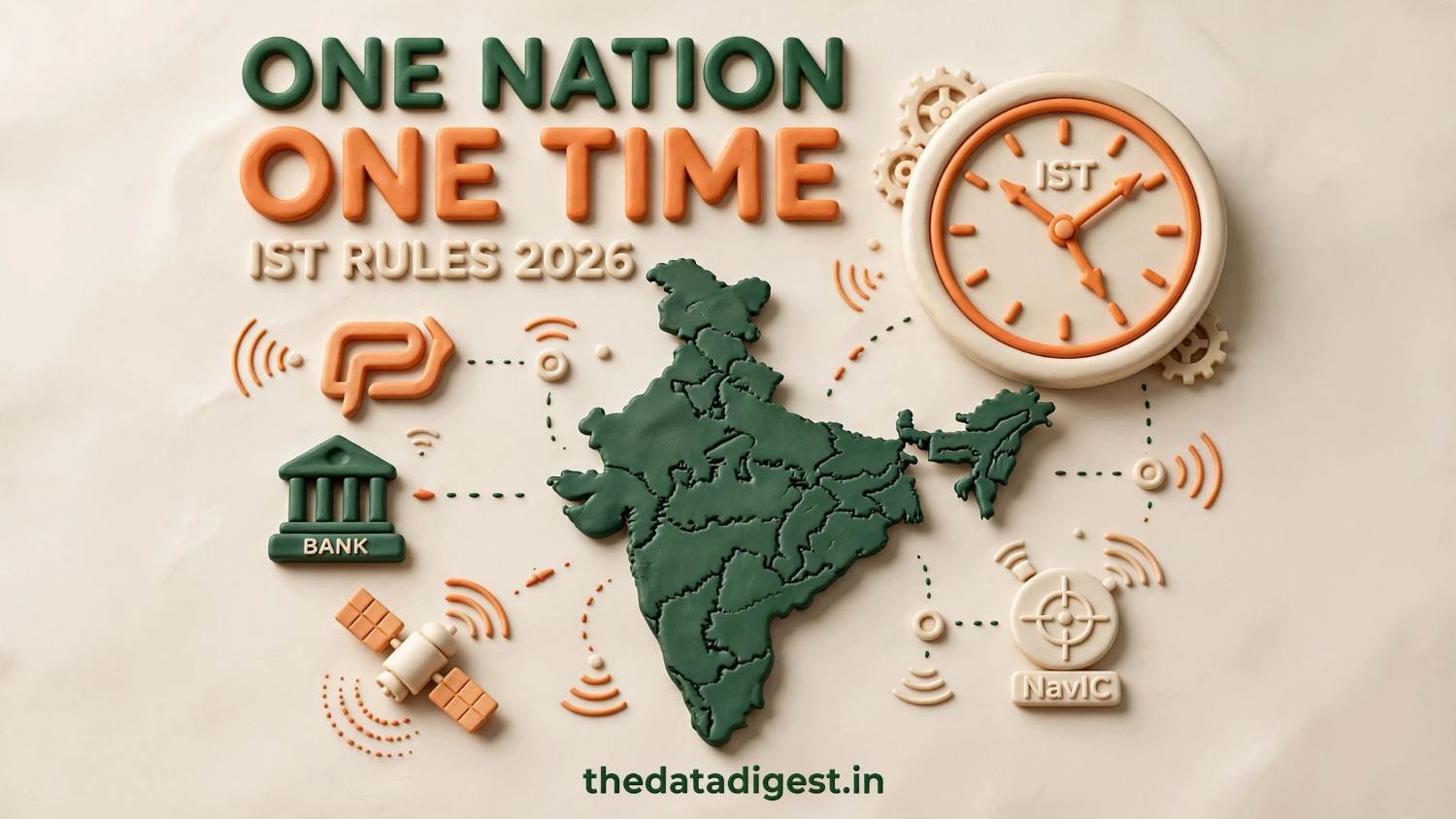
One Nation, One Time क्या है? IST Rules 2026 से 2027 में क्या बदलेगा?
भारत में “One Nation, One Time” को लेकर चर्चा तेज है। लेकिन क्या इसका मतलब यह है कि फरवरी 2027 से आपकी घड़ी का समय बदल जाएगा? जानिए Legal Metrology (Indian Standard Time) Rules, 2026, IST, CSIR-NPL, NavIC, GPS, Banking, UPI, Telecom और Digital Systems से जुड़ी पूरी जानकारी आसान भाषा में।
केंद्र सरकार ने Legal Metrology (Indian Standard Time) Rules, 2026 notify किए हैं। Rules को 29 August 2026 को Official Gazette में प्रकाशित किया गया। नियम Gazette publication के 180 दिन बाद लागू होंगे। इस आधार पर calculated commencement date 25 February 2027 है।
ध्यान दें: इसका अर्थ यह नहीं है कि आम लोगों की घड़ियों में एक घंटे का बदलाव होगा या भारत में नया civil time zone बन जाएगा।
One Nation One Time 2026: सबसे जरूरी Facts
“One Nation, One Time” का मतलब भारत में कोई नया time zone बनाना नहीं है। भारत पहले से Indian Standard Time यानी IST का इस्तेमाल करता है। नए Rules का उद्देश्य महत्वपूर्ण legal, administrative, commercial और time-dependent digital systems के लिए एक common, accurate और traceable Indian Standard Time reference को मजबूत करना है।
1 One Nation One Time क्या है?
“One Nation, One Time” को अगर बहुत आसान भाषा में समझें तो इसका उद्देश्य भारत में महत्वपूर्ण systems के लिए एक common और भरोसेमंद official time reference को मजबूत करना है।
भारत में Indian Standard Time (IST) पहले से ही लागू है। इसलिए इसे भारत में किसी नए time zone की शुरुआत समझना सही नहीं होगा।
आधुनिक digital economy में समय केवल घड़ी देखने के लिए जरूरी नहीं है। Banking transactions, telecom networks, power systems, data centres, government databases, transportation और दूसरे automated systems में accurate timestamps की जरूरत होती है।
इसी वजह से सरकार ने Indian Standard Time को national timing infrastructure के रूप में और मजबूत करने के लिए 2026 के नए Rules notify किए हैं।
2 2026 के नए IST Rules में क्या खास है?
Legal Metrology (Indian Standard Time) Rules, 2026 का focus Indian Standard Time के dissemination, synchronisation और traceability से जुड़े framework पर है।
इसका उद्देश्य यह सुनिश्चित करना है कि जिन sectors और systems को precise time की जरूरत है, वे recognised Indian timing references के साथ अपने clocks और time-dependent operations को synchronise कर सकें।
| Point | जानकारी |
|---|---|
| Rules का नाम | Legal Metrology (Indian Standard Time) Rules, 2026 |
| Notification | 27 August 2026 |
| Official Gazette Publication | 29 August 2026 |
| Commencement | Publication के 180 दिन बाद |
| Calculated Date | 25 February 2027 |
| Indian Standard Time | UTC + 5:30 |
| National Metrology Institute | CSIR-NPL |
3 इसकी जरूरत क्यों पड़ी?
पहले समय का मतलब मुख्य रूप से घड़ी और calendar से था। लेकिन आज लगभग हर digital system timestamp पर निर्भर करता है।
अगर अलग-अलग servers या systems के clocks में छोटा-सा अंतर भी हो, तो बड़ी मात्रा में automated events को analyse करते समय event sequence समझना कठिन हो सकता है।
उदाहरण के लिए banking system, authentication server और transaction processing system किसी एक घटना को अलग-अलग timestamps के साथ record करें, तो investigation या technical analysis में एक consistent time reference बहुत उपयोगी होता है।
इसी तरह telecom networks, electricity grids, transportation systems और large-scale data centres में precise timing system coordination का हिस्सा हो सकती है।
4 One Nation One Time के पीछे 4 बड़े कारण
Accurate Time
Critical systems को एक reliable national timing reference से synchronise करने में मदद।
Cyber Resilience
Timing infrastructure को spoofing, jamming और cyber-related disruptions के खिलाफ अधिक resilient बनाने की दिशा।
Financial Systems
Banking और digital financial systems में consistent timestamps और system coordination महत्वपूर्ण हैं।
Telecom
Large-scale communication networks में accurate timing और synchronisation उपयोगी होती है।
Power Systems
Electricity infrastructure में coordinated measurements और time-dependent operations के लिए precise timing उपयोगी है।
Indian Timing Infrastructure
CSIR-NPL, RRSLs और NavIC जैसे Indian timing resources को national ecosystem में मजबूत करना।
5 CSIR-NPL की क्या भूमिका है?
CSIR-National Physical Laboratory (CSIR-NPL) भारत की national metrology institution है और Indian Standard Time से संबंधित national scientific infrastructure में इसकी महत्वपूर्ण भूमिका है।
NPL की time and frequency metrology infrastructure highly precise atomic clocks और international reference के साथ traceability पर आधारित है।
इसका मतलब यह है कि official Indian time केवल किसी सामान्य wall clock से तय नहीं होता। इसके पीछे precision measurement और scientific timekeeping infrastructure मौजूद है।
6 UTC और IST में क्या अंतर है?
UTC (Coordinated Universal Time) international reference time scale है। भारत का Indian Standard Time UTC से 5 घंटे 30 मिनट आगे है।
| Time Reference | India के संदर्भ में | अर्थ |
|---|---|---|
| UTC | Base reference | International reference time scale |
| IST | UTC + 5:30 | भारत का Standard Time |
| Indian Standard Meridian | 82°30′ E | IST के निर्धारण का geographical reference |
7 GPS और NavIC का क्या संबंध है?
One Nation One Time की खबरों में GPS और NavIC का नाम काफी सुनने को मिल रहा है। लेकिन यहां एक important clarification जरूरी है।
नए Rules का मतलब यह नहीं है कि भारत में GPS बंद हो जाएगा। उद्देश्य Indian authorised timing infrastructure के options को मजबूत करना और external timing sources पर dependence को कम करने की दिशा में काम करना है।
NavIC (Navigation with Indian Constellation) भारत की satellite navigation system है और Rules के framework में NavIC-based timing reference/device को authorised timing source के रूप में शामिल किया गया है।
| System | मुख्य भूमिका |
|---|---|
| CSIR-NPL | National metrology infrastructure और IST realisation |
| RRSLs | Regional reference और dissemination infrastructure |
| NavIC | Indian satellite-based timing/navigation capability |
| NIC | Government digital infrastructure में authorised timing ecosystem का हिस्सा |
8 White Rabbit Technology क्या है?
White Rabbit एक high-precision network timing technology है जिसका इस्तेमाल अत्यंत accurate clock synchronisation के लिए किया जा सकता है।
2026 में भारत में Indian Standard Time dissemination के लिए White Rabbit Technology-based demonstration network की commissioning की जानकारी सरकार ने दी है।
इसका उद्देश्य banking, telecommunications, power, transportation और digital governance जैसे sectors में highly precise IST dissemination की capability को demonstrate करना है।
इसे आसान भाषा में ऐसे समझें:
9 किन क्षेत्रों में इसका सबसे ज्यादा महत्व होगा?
| Sector | Accurate Time क्यों जरूरी है? |
|---|---|
| 🏦 Banking | Transactions और system events के consistent timestamps के लिए। |
| 💳 Digital Payments | Automated transaction processing और event records के लिए। |
| 📱 Telecom | Network synchronisation और time-dependent operations के लिए। |
| ⚡ Power | Grid monitoring, coordination और time-sensitive measurements के लिए। |
| 🚆 Transport | Large-scale transportation systems के coordination में मदद। |
| 🖥️ Data Centres | Distributed servers और logs के लिए consistent timing उपयोगी है। |
| 🏛️ Government | Legal, administrative और digital records में reliable timestamps। |
10 Cybersecurity में सही समय इतना जरूरी क्यों है?
Cybersecurity systems में logs बहुत महत्वपूर्ण होते हैं। किसी incident की जांच के दौरान security team को यह समझना पड़ता है कि कौन-सी घटना पहले हुई और कौन-सी बाद में।
अगर अलग-अलग servers के clocks में बड़ा mismatch हो तो logs की timeline analyse करना मुश्किल हो सकता है।
इसी वजह से secure और reliable timing infrastructure modern digital infrastructure का महत्वपूर्ण हिस्सा बन सकता है।
11 UPI और Banking पर क्या असर होगा?
UPI users के लिए कोई नया button, नया app या नया time zone आने की बात इन Rules का उद्देश्य नहीं है।
असली महत्व backend infrastructure का है। Digital financial systems में transactions, authentication, server processing और security events timestamps के साथ record होते हैं।
एक consistent national timing reference systems के बीच event chronology और record consistency को बेहतर support कर सकता है।
12 क्या भारत में नया Time Zone बनेगा?
नहीं।
भारत का existing civil time Indian Standard Time है। One Nation One Time initiative का उद्देश्य भारत को अलग-अलग civil time zones में बांटना नहीं है।
भारत के Standard Time का geographical reference 82°30′ East longitude है।
भारत पूर्व से पश्चिम तक काफी बड़े geographical क्षेत्र में फैला हुआ है। पृथ्वी की rotation के कारण अलग-अलग longitude पर सूर्य के local position में समय का अंतर naturally होता है।
इसी वजह से Northeast India के लिए अलग time zone या daylight utilisation की चर्चा कई वर्षों से होती रही है।
लेकिन यह debate और 2026 के IST Rules को एक ही चीज समझना सही नहीं होगा।
| मुद्दा | मुख्य उद्देश्य |
|---|---|
| One Nation One Time / IST Rules | Common, legal और traceable national timing reference |
| Separate Time Zone Debate | Geography, sunrise और daylight utilisation |
13 क्या आपके Mobile या घड़ी का Time बदल जाएगा?
सामान्य नागरिक के लिए ऐसा कोई नया one-hour time change नहीं है।
अगर आपका smartphone India के normal automatic date/time और time-zone settings का इस्तेमाल कर रहा है, तो केवल इन Rules की वजह से आपको अपनी घड़ी एक घंटे आगे या पीछे करने की जरूरत नहीं होगी।
मुख्य बदलाव उन organisations और systems में है जिन्हें official और precise time reference के साथ synchronisation की जरूरत है।
14 One Nation One Time 2026–2027 Timeline
Legal Metrology (Indian Standard Time) Rules, 2026 को notify किया गया।
Rules Official Gazette में प्रकाशित हुए।
Rules publication के 180 दिन बाद लागू होने का provision रखते हैं।
29 August 2026 से 180 दिन की गणना के अनुसार Rules की commencement date 25 February 2027 बनती है।
15 One Nation One Time के संभावित फायदे
Better Synchronisation
अलग-अलग systems के clocks को common reference से synchronise करना आसान होगा।
Better Traceability
Time records को recognised national reference तक trace करना संभव होगा।
Digital Resilience
National timing infrastructure में resilience और redundancy को बढ़ावा मिल सकता है।
Digital India
Large-scale digital infrastructure के लिए reliable timing foundation।
Reliable Records
Time-dependent digital और administrative records की consistency बेहतर हो सकती है।
Indian Infrastructure
Domestic timing technologies और Indian reference sources की भूमिका मजबूत होगी।
16 इसके सामने क्या Challenges हो सकते हैं?
- पुराने IT और network systems को नए timing framework के अनुरूप करना।
- अलग-अलग sectors में technical compliance सुनिश्चित करना।
- Reliable backup timing sources और redundancy बनाए रखना।
- Jamming और spoofing जैसे risks से timing infrastructure को सुरक्षित रखना।
- Remote locations तक reliable timing dissemination पहुंचाना।
- Critical infrastructure में transition के दौरान service continuity बनाए रखना।
इसी कारण transition period महत्वपूर्ण है। Organisations को अपने systems और timing architecture को assess करने तथा आवश्यक technical changes करने के लिए समय मिलता है।
17 सबसे जरूरी सवालों के सीधे जवाब
| सवाल | सीधा जवाब |
|---|---|
| क्या नया Time Zone बनेगा? | ❌ नहीं। Existing IST ही national civil time है। |
| क्या मोबाइल की घड़ी बदल जाएगी? | ❌ सामान्य नागरिक के लिए कोई नया one-hour time change नहीं है। |
| क्या GPS बंद होगा? | ❌ नहीं। Indian timing sources के options और infrastructure को मजबूत किया जा रहा है। |
| IST कौन maintain करता है? | CSIR-NPL national scientific timing infrastructure में प्रमुख भूमिका निभाता है। |
| IST कितना है? | UTC + 5:30 |
| Rules कब लागू होंगे? | Gazette publication के 180 दिन बाद; calculated date 25 February 2027 है। |
18 निष्कर्ष: One Nation One Time का असली मतलब क्या है?
One Nation One Time को केवल “भारत में अब एक ही समय चलेगा” कहना अधूरा होगा।
भारत में Indian Standard Time पहले से ही national civil time है। 2026 के नए Rules का महत्व इस बात में है कि official, commercial, administrative और critical time-dependent systems के लिए Indian Standard Time को एक common, legally recognised, traceable और resilient national reference के रूप में मजबूत किया जा रहा है।
CSIR-NPL की scientific timekeeping infrastructure, Regional Reference Standard Laboratories, NavIC-based timing capability और high-precision technologies जैसे White Rabbit इस broader ecosystem का हिस्सा हैं।
फरवरी 2027 में आपकी घड़ी का समय अचानक एक घंटा आगे या पीछे नहीं होने वाला। “One Nation One Time” का बड़ा बदलाव आपके हाथ की घड़ी से ज्यादा भारत के digital और critical infrastructure के background में चलने वाले time systems से जुड़ा है।
19 One Nation One Time FAQ
📚 Official & Reference Sources
इस article में दी गई मुख्य जानकारी को Government of India और CSIR-NPL की उपलब्ध जानकारी के आधार पर रखा गया है।
-
Press Information Bureau (PIB):
Legal Metrology (Indian Standard Time) Rules, 2026
Official PIB information देखें -
Department of Consumer Affairs / PIB:
IST Rules 2026 और national timing infrastructure
Government update देखें -
CSIR-NPL:
Indian Standard Time / Time & Frequency Metrology
CSIR-NPL information देखें