
India’s Paperless Census 2027: The World’s Largest Green Governance Experiment
How India’s first digital Census is transforming data collection, citizen participation, governance and the way national statistics are created.
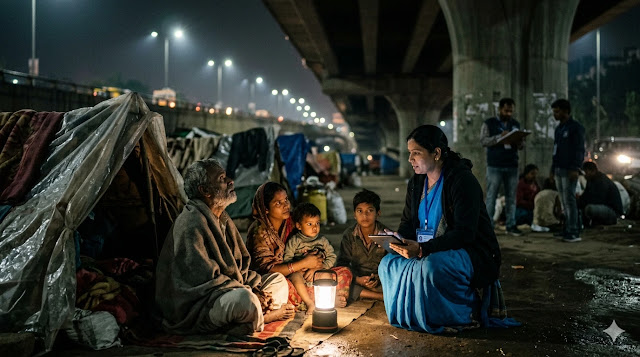
India is preparing to conduct Census 2027 in a way that is fundamentally different from previous national censuses. For the first time, the Census will be conducted through digital tools, with enumerators using mobile applications to collect and submit information.
The exercise also introduces Self-Enumeration, allowing eligible households to submit their information online before the door-to-door visit. The Government describes Census 2027 as the world’s largest census exercise.
This shift from traditional paper-heavy processes to digital data collection makes the Paperless Census more than a technology upgrade. It represents a new model of large-scale, technology-enabled public administration.
What Is a Paperless Census?
A Paperless Census is a census process in which information is collected, transmitted, monitored and processed primarily through digital systems instead of relying on traditional paper forms.
India’s Census 2027 is officially planned as the country’s first Census conducted through digital means. Enumerators will use mobile applications to collect information and transmit it digitally.
Instead of depending on stacks of printed forms and manual compilation, Census officials can collect information digitally, transmit it through secure systems and manage operations through dedicated digital platforms.
Why Is Census 2027 Different?
How India’s Paperless Census 2027 Will Work
Census 2027 is being conducted in two broad phases. The first phase focuses on housing and household information, while the second phase focuses on population enumeration.
Housing conditions and household amenities are recorded. This phase is being carried out during 2026 according to State/UT-specific schedules.
A secure web-based facility allows respondents to enter information online before the door-to-door enumeration period.
Population Enumeration is scheduled for February 2027 in most parts of India, with special arrangements for specified snow-bound non-synchronous areas.
For most States and Union Territories, the reference date is 00:00 hours of 1 March 2027.
The Digital Technology Behind Census 2027
Census 2027 is supported by a set of digital tools designed for different parts of the enumeration process.
Why Going Paperless Matters for the Environment
A nationwide census involves an enormous amount of information. Moving major parts of the process from paper forms to digital collection can reduce the need for printing, physical movement, storage and manual handling of documents.
The environmental advantage of Census 2027 should not be presented as a specific number of trees saved unless an official assessment provides that figure.
The stronger and more defensible point is that digital collection can reduce dependence on paper-based documentation and associated administrative processes.
This makes the Paperless Census relevant to the broader conversation around green governance — using technology not only to make government services faster, but also to reduce unnecessary physical resource consumption.
Paperless Census and Green Governance
Green governance is not limited to renewable energy or environmental policies. It also includes designing public systems that use resources efficiently.
Census 2027 provides an important example of this approach because digital technology is being integrated directly into a nationwide administrative exercise.
Self-Enumeration: Citizens Become Part of the Digital Census
One of the most significant innovations is the introduction of Self-Enumeration.
Through this facility, respondents can enter their household information online before the door-to-door enumeration process. The facility is designed to make participation more convenient and reduce repetitive data entry.
Self-Enumeration changes the relationship between citizens and the Census process. Citizens are no longer only respondents waiting for an enumerator; eligible respondents can actively participate in submitting their information through a digital platform.
Is the Paperless Census Secure?
Census information is governed by the legal framework applicable to the Census of India. Government information on Census 2027 states that data security has been given high priority and that digital systems include security measures such as encryption and multi-factor authentication.
The Government has also stated that Census data collected under the Census Act, 1948 is strictly confidential.
Digital does not automatically mean risk-free. Large-scale government datasets require strong authentication, secure infrastructure, controlled access and responsible data handling. Census 2027’s digital architecture is therefore also an important test of public-sector data security.
Paperless Census 2027: Digital vs Traditional Census
| Feature | Traditional Approach | Census 2027 Digital Model |
|---|---|---|
| Data Collection | Paper-oriented processes | Mobile-based digital collection |
| Citizen Participation | Mainly enumerator-led | Self-Enumeration option added |
| Monitoring | More dependent on manual administration | Digital CMMS-based monitoring |
| Data Transmission | Physical/document-based movement | Digital transmission |
| Data Usability | More processing required | Designed for cleaner, machine-readable data |
| Environmental Footprint | Higher paper dependency | Reduced dependence on paper-based collection |
Census 2027 as a Governance Experiment
Calling Census 2027 a green governance experiment does not mean that the exercise is an environmental experiment in isolation. Rather, it highlights how a major government process can combine digital transformation, citizen participation, data management and resource efficiency.
The scale makes the exercise especially significant. More than 3 million enumerators, supervisors and other officials are expected to be involved across the country.
At this scale, even relatively small improvements in administrative processes can have a substantial operational impact.
What Could the Paperless Census Mean for India’s Future?
The significance of Census 2027 may extend beyond the Census itself. Once a country develops the capability to collect, process and distribute large-scale public data digitally, those capabilities can influence how future governance systems are designed.
- Faster availability of structured information for policymakers.
- Better digital workflows for large government exercises.
- More accessible and machine-readable statistical information.
- Greater citizen participation through secure online systems.
- Reduced dependence on paper-heavy administrative processes.
Important Facts About India’s Census 2027
| Census | Census of India 2027 |
| Digital Status | India’s first Census conducted through digital means |
| Phases | Houselisting & Housing Census + Population Enumeration |
| Self-Enumeration | Available for the first time |
| Languages | Digital facilities available in 16 languages |
| Reference Date | 00:00 hours, 1 March 2027 for most States/UTs |
| Field Workforce | More than 3 million officials and field functionaries |
| Legal Framework | Census Act, 1948 and Census Rules, 1990, as amended |
Frequently Asked Questions About Paperless Census 2027
What is India’s Paperless Census 2027?
India’s Paperless Census 2027 refers to the country’s first Census conducted through digital means, using mobile applications, digital platforms and an online Self-Enumeration facility.
Is Census 2027 India’s first digital Census?
Yes. The Government has officially described Census 2027 as India’s first Census to be conducted digitally.
What is Self-Enumeration in Census 2027?
Self-Enumeration is a secure web-based facility that allows respondents to enter their information online before the door-to-door enumeration process.
Why is Census 2027 called green governance?
The digital model can reduce dependence on paper-based documentation and physical administrative processes while supporting more efficient digital data management.
When is the reference date for Census 2027?
For most States and Union Territories, the reference date is 00:00 hours of 1 March 2027. Special non-synchronous arrangements apply to specified snow-bound areas.
How many people will be involved in Census 2027?
More than 3 million enumerators, supervisors and other Census officials are expected to participate in the nationwide exercise.
Will Census 2027 data be collected using mobile apps?
Yes. Enumerators will collect and submit Census information through secure mobile applications.
📢 Follow Data Digest for Digital India & Census Updates
Get useful updates on technology, government information, digital services and important national developments.
📲 Follow WhatsApp Channel ✈️ Join TelegramInformation in this article has been checked against official Government of India / Census sources, including the Ministry of Home Affairs, Press Information Bureau and Office of the Registrar General & Census Commissioner of India.
- PIB — Digital Tools and Census 2027
- PIB — Registrar General & Census Commissioner Press Conference
- PIB — Census 2027 National Rollout
- Census of India — Official Website
Editorial note: Dates, procedures and operational details may be updated through official notifications. Readers should refer to the latest Government of India / Census of India notification for state-specific instructions.
India’s Paperless Census 2027 is significant not simply because paper is being replaced by smartphones. Its larger importance lies in combining digital data collection, citizen self-enumeration, large-scale administrative technology and more efficient data workflows in one of the world’s biggest statistical exercises.
If implemented securely and inclusively, the Paperless Census can become an important case study in how digital technology can support efficient, citizen-centric and resource-conscious governance.