
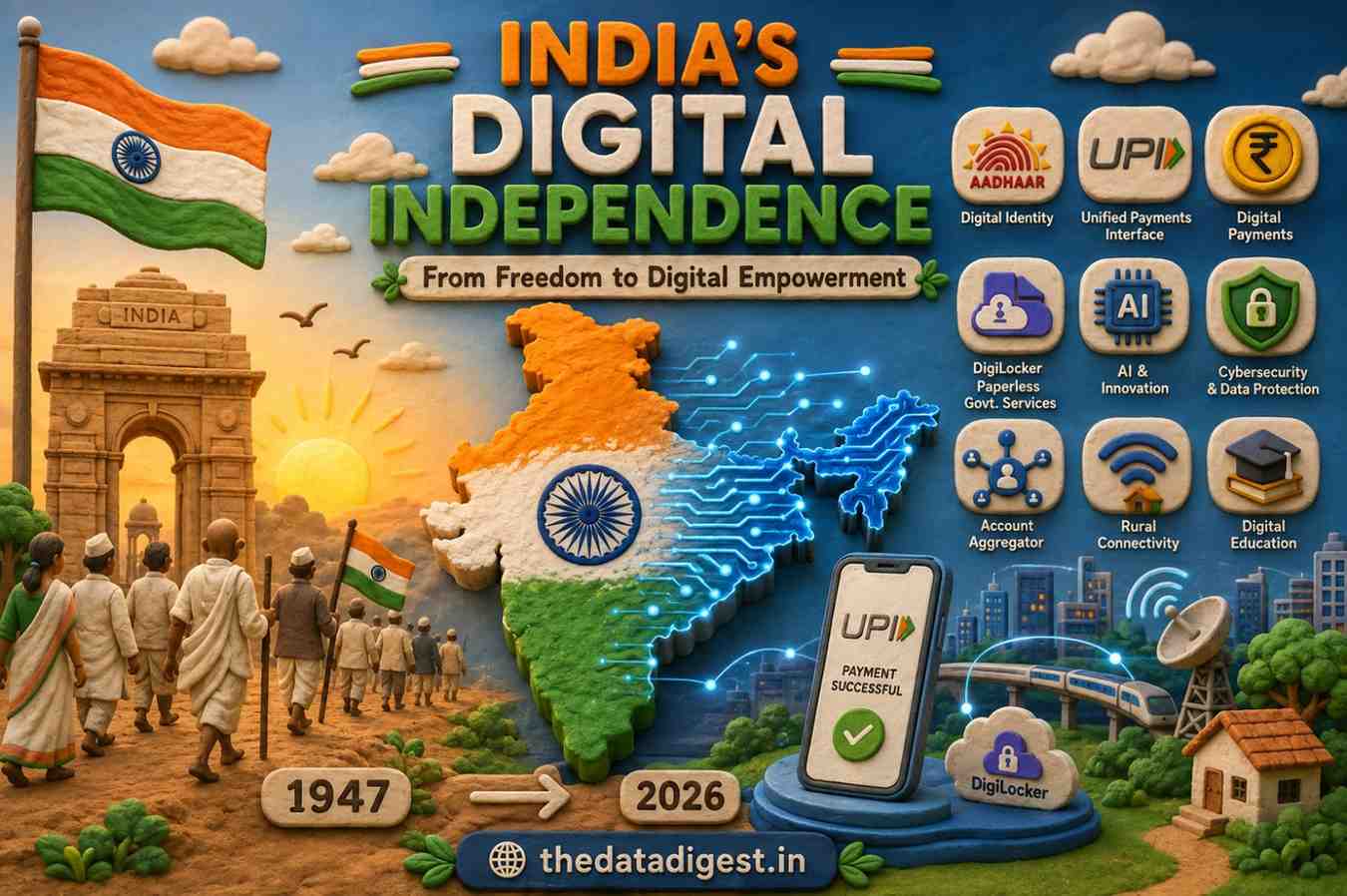
India’s Digital Transformation: राजनीतिक आज़ादी से Digital Freedom तक | 1947–2026
1947 में मिली राजनीतिक आज़ादी से लेकर आज के Digital India, Aadhaar, UPI, DigiLocker, 5G और AI तक — भारत की digital journey आखिर कैसे बदली?
भारत की आज़ादी की कहानी सिर्फ 15 अगस्त 1947 पर खत्म नहीं हुई। Political freedom ने भारत को अपने institutions, economy और future को खुद shape करने का अवसर दिया। समय के साथ यही journey एक नए रूप में आगे बढ़ी — information, identity, payments, documents, education और government services तक digital access के रूप में।
यही है India’s Digital Transformation की कहानी — nation-building के शुरुआती वर्षों से लेकर telecom expansion, internet revolution, Aadhaar, Digital India, UPI, DigiLocker, 5G और अब emerging AI era तक।
🇮🇳 एक मिनट में समझें: India’s Digital Transformation क्या है?
India’s Digital Transformation का मतलब है धीरे-धीरे ऐसे systems की ओर बढ़ना जो पहले paper-based, physical और fragmented थे और अब connected digital infrastructure और online services के जरिए accessible हो रहे हैं।
यह transformation केवल technology companies तक सीमित नहीं है। इसका असर आम भारतीय की daily life पर भी दिखाई देता है — identity verification, banking, digital payments, government services, education, documents, communication, online commerce और information access तक।
1. 1947: Political Freedom एक शुरुआत थी
15 August 1947 को लंबे स्वतंत्रता संघर्ष के बाद India independent हुआ। उस समय सबसे बड़ी चुनौती digital technology नहीं, बल्कि nation-building थी।
भारत को institutions बनाने थे, education का विस्तार करना था, infrastructure improve करना था, agriculture और industries को मजबूत करना था और ऐसी systems तैयार करनी थीं जो एक बहुत बड़ी और diverse population की जरूरतों को पूरा कर सकें।
आज के digital perspective से देखें तो इस दौर की importance और स्पष्ट होती है। Technology तभी society को transform कर सकती है जब उसके पीछे strong institutions, infrastructure, skills और public participation मौजूद हों।
2. Nation Building से Technology-Ready India तक
Independence के बाद के दशकों में India ने scientific institutions, higher education, telecommunications, space research, computing और industrial capacity पर लगातार investment किया।
इन developments ने तुरंत today’s digital economy नहीं बनाई। लेकिन इन्होंने knowledge, institutions और technological capabilities की वह foundation तैयार की, जिस पर बाद में India’s digital transformation तेजी से आगे बढ़ सका।
Science & Technology
Scientific institutions ने India की long-term technological capabilities को मजबूत करने में महत्वपूर्ण भूमिका निभाई।
Telecommunications
Communication networks के expansion ने धीरे-धीरे ज्यादा लोगों और regions को connect किया।
Computing
Computing और software capabilities के विकास ने आगे चलकर India’s technology economy को मजबूत किया।
Human Capital
Engineering, science और technical education ने technology-skilled workforce तैयार करने में मदद की।
3. Telecom और Internet Revolution
India की digital journey में अगला बड़ा बदलाव telecommunications और internet connectivity के जरिए आया। Mobile phones ने communication का तरीका बदल दिया, जबकि affordable internet ने लोगों के search करने, सीखने, काम करने और business करने के तरीके को बदलना शुरू किया।
यह transition इसलिए भी important है क्योंकि digital freedom केवल software से नहीं मिलती। इसके लिए लोगों के पास networks, devices और affordable connectivity का access भी होना जरूरी है।
Ministry of Electronics and Information Technology के अनुसार broadband subscribers की संख्या लगभग 25 करोड़ in 2014-15 से बढ़कर 103 करोड़ in 2024-25 हो गई, यानी एक दशक में बहुत बड़ा expansion हुआ।
4. Aadhaar, JAM और Digital Identity का विस्तार
जैसे-जैसे India’s digital ecosystem बढ़ा, identity digital service delivery का एक important layer बन गई। Aadhaar ने large-scale digital identity infrastructure तैयार किया, जबकि JAM — Jan Dhan, Aadhaar और Mobile framework ने identity, banking access और mobile connectivity को एक साथ जोड़ने में मदद की।
इस architecture ने Direct Benefit Transfer यानी DBT और government तथा financial services तक digital access को support करने में महत्वपूर्ण भूमिका निभाई।
2026 में जारी government data के अनुसार March 2026 तक 144 करोड़ से ज्यादा Aadhaar numbers और 57 करोड़ से ज्यादा Jan Dhan accounts report किए गए।
Digital Identity क्यों important है?
एक reliable digital identity layer authentication और services तक access को faster बना सकती है और बार-बार physical paperwork पर dependence कम कर सकती है।
5. 2015: Digital India ने दिशा बदल दी
July 2015 में Government of India ने Digital India programme launch किया। इसका broader objective technology का इस्तेमाल करके digital services और opportunities तक access को improve करना था।
Programme में internet access, affordability, digital public infrastructure और digital literacy जैसे areas पर focus किया गया।
यह सोच में एक बड़ा बदलाव था। Digital technology को सिर्फ एक industry के रूप में देखने के बजाय इसे public services और citizen empowerment को support करने वाली infrastructure के रूप में भी देखा जाने लगा।
6. UPI: जब Digital Payments रोज़मर्रा की जिंदगी का हिस्सा बन गए
India की digital transformation का सबसे visible example Unified Payments Interface यानी UPI है।
UPI ने interoperable infrastructure के जरिए instant bank-to-bank digital payments को आसान बनाया। समय के साथ QR codes और smartphone payments consumers, merchants और businesses के everyday transactions का हिस्सा बन गए।
2026 में published government data के अनुसार March 2026 में UPI ने लगभग 2,264 करोड़ transactions process किए, जिनकी value ₹29.53 लाख करोड़ से ज्यादा थी। इसी source के अनुसार UPI-based digital payments कई देशों में operational हो चुके हैं।
7. DigiLocker, UMANG और Paperless Governance की ओर कदम
Digital transformation ने यह भी बदल दिया कि citizens documents और government services तक कैसे पहुंचते हैं।
DigiLocker issued documents और certificates को digitally access करने के लिए एक secure platform provide करता है। इसका उद्देश्य physical copies पर dependence कम करना और authenticated documents को access तथा share करना आसान बनाना है।
UMANG एक ऐसा digital interface provide करता है जिसके जरिए citizens अलग-अलग government bodies की services access कर सकते हैं। 2026 में published government information के अनुसार UMANG पर 2,400 से ज्यादा services available थीं।
DigiLocker
Issued documents और certificates तक digital access।
UMANG
कई public services को एक digital interface से access करने की सुविधा।
8. Digital Public Infrastructure: India’s Bigger Transformation
India की digital journey में शायद सबसे important development कोई एक app नहीं है। असली बदलाव है interconnected Digital Public Infrastructure यानी DPI का emergence।
DPI को simple language में ऐसे समझ सकते हैं: ये reusable digital building blocks होते हैं, जिनकी मदद से अलग-अलग services और organisations interoperable systems के जरिए एक-दूसरे के साथ interact कर सकते हैं।
Digital Identity
Aadhaar ने population-scale digital identity layer provide किया है।
Digital Payments
UPI interoperable और real-time digital payments को enable करता है।
Digital Documents
DigiLocker issued documents के paperless access और sharing को support करता है।
Digital Connectivity
Broadband, mobile networks और 5G digital services की reach को बढ़ा रहे हैं।
Government material India’s DPI ecosystem को digital identity, payments और document infrastructure के combination के रूप में describe करता है, जिसका उद्देश्य connectivity को practical services और economic participation में बदलना है।
9. 2026 का India: Digital Access से Digital Intelligence तक
2026 तक India’s digital transformation सिर्फ services को online करने तक सीमित नहीं रह गया है। अगला phase AI, advanced connectivity, digital security, consent-based identity services, automation और intelligent public platforms पर ज्यादा focus कर रहा है।
इस phase में 5G expansion भी important है। June 2026 के government data के अनुसार 99.9% districts में 5G availability report की गई थी और population coverage लगभग 85% थी।
साथ ही नई digital identity services में privacy और user control पर भी ज्यादा emphasis दिखाई दे रहा है। उदाहरण के लिए, 2026 में launch हुए नए Aadhaar App में selective sharing और consent control जैसे features पर focus किया गया है।
🕰️ India’s Digital Transformation Timeline: 1947 → 2026
Political Freedom
India independent हुआ और nation-building की लंबी journey शुरू हुई।
Scientific & Institutional Foundations
India ने institutions, education, communications, science और technology capabilities को develop किया।
Telecom & Internet Expansion
Communication technology और internet access ने everyday life और business को बदलना शुरू किया।
Digital Identity & Connectivity
Aadhaar, mobile connectivity और financial inclusion ने नए digital foundations तैयार किए।
Digital India
Digital India programme ने digital services, infrastructure और literacy को बड़ा policy push दिया।
UPI & Digital Payments
Interoperable real-time payments ने digital transactions को everyday life का हिस्सा बना दिया।
DPI at Scale
Aadhaar, UPI, DigiLocker और अन्य platforms important digital public infrastructure layers बने।
AI, 5G & Digital Intelligence
India की अगली digital phase में connectivity, AI, cybersecurity, digital identity और intelligent services तेजी से जुड़ रहे हैं।
10. “Digital Freedom” का असली मतलब क्या है?
Digital Freedom का मतलब unlimited technology access नहीं है। इस article के context में इसका मतलब है कि लोग digital systems का इस्तेमाल करके economic, educational, civic और everyday life में ज्यादा आसानी से participate कर सकें।
🎬 Watch & Read More
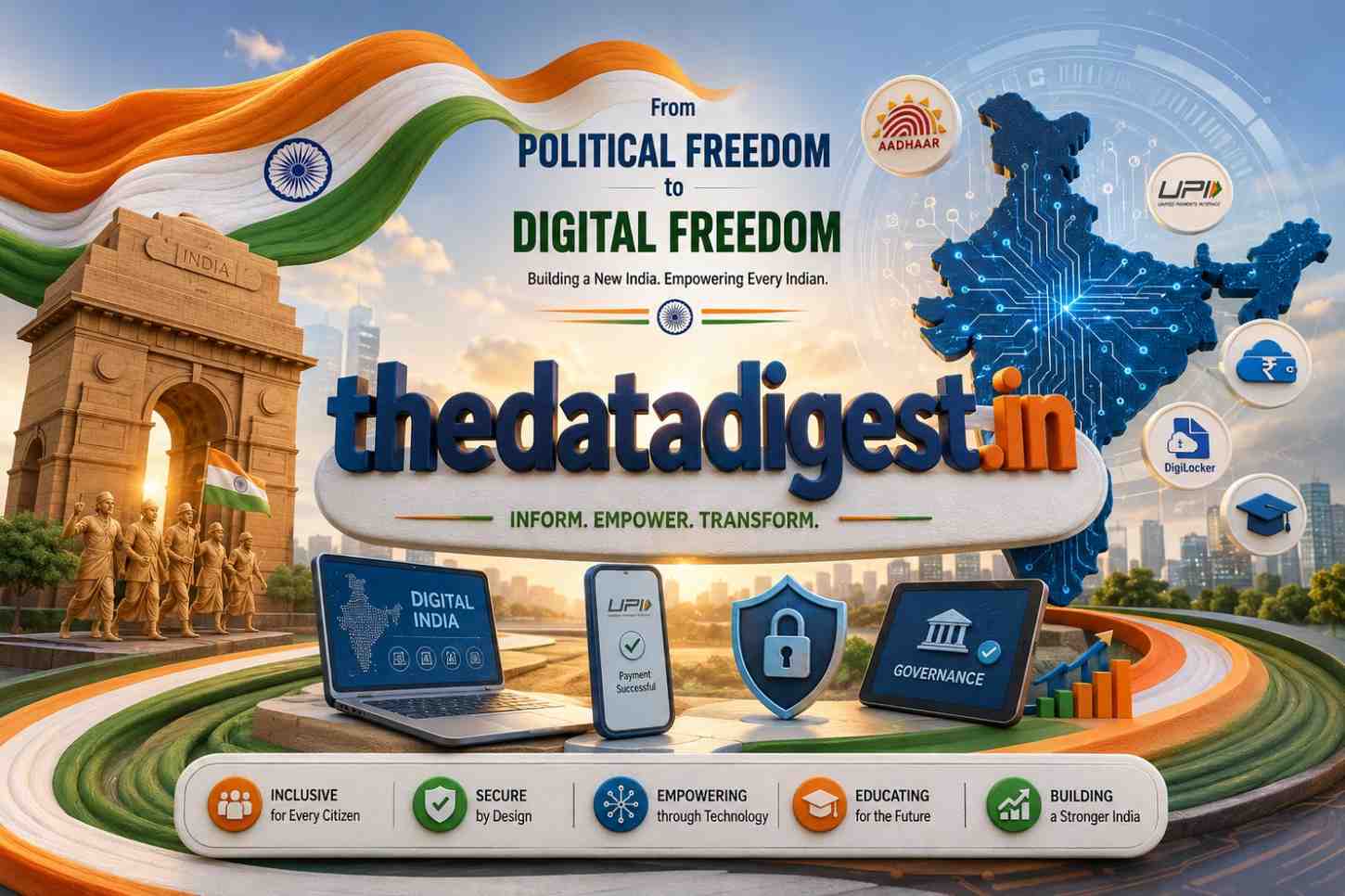
India की digital transformation को short visual format में समझना चाहते हैं? पहले हमारा short video देखें और उसके बाद detailed LinkedIn article पढ़ें।
🚀 अगला Chapter: India’s Digital Journey आगे कहाँ जा सकती है?
India की digital transformation का अगला stage संभवतः AI, advanced connectivity, cybersecurity, digital skills, privacy-preserving technologies और increasingly intelligent public services से shape होगा।
अगली generation के लिए digital literacy traditional literacy जितनी ही important हो सकती है। Information को verify करना, online account को सुरक्षित रखना, digital services का सही इस्तेमाल करना और AI-generated content को समझना आने वाले समय में बेहद जरूरी होगा।
इसीलिए India’s digital journey सिर्फ faster smartphones या ज्यादा apps की कहानी नहीं है। आखिरकार यह people, opportunity, access, trust और participation की कहानी है।
🎓 Students & Young Readers के लिए 5 Important Points
- 1947 ने India को political freedom दी।
- Infrastructure और education ने development की foundation तैयार की।
- Telecom और internet connectivity ने digital era का रास्ता खोला।
- Aadhaar, UPI और DigiLocker ने population-scale digital infrastructure को मजबूत किया।
- AI और cybersecurity India’s digital transformation के अगले phase को shape करेंगे।
❓ Frequently Asked Questions
India’s Digital Transformation क्या है?
Digital India programme कब launch हुआ था?
UPI India’s digital transformation में कैसे मदद करता है?
India के digital ecosystem में Aadhaar क्यों important है?
Digital Public Infrastructure यानी DPI क्या है?
अगली generation के लिए Digital Freedom का क्या मतलब हो सकता है?
इस article को तैयार करने के लिए Government of India के publicly available official sources, including Press Information Bureau और National Government Services Portal, का उपयोग किया गया है।
• Digital India programme और broadband growth: PIB / Ministry of Electronics & IT
• Digital Public Infrastructure, Aadhaar, UPI और DigiLocker: PIB / Digital Public Infrastructure
• Telecom, 5G, JAM और UPI: PIB / Digital Infrastructure
• DigiLocker: National Government Services Portal
• Aadhaar App और digital identity: PIB / UIDAI
📢 Data Digest को Follow करें
Technology, government, career और digital-awareness से जुड़े useful updates के लिए Data Digest को अपने पसंदीदा platform पर follow करें।
🇮🇳 Conclusion: Freedom Continues to Evolve
1947 से 2026 तक India की journey यह दिखाती है कि independence कोई static idea नहीं है। Political freedom ने nation-building की foundation रखी; economic, scientific और technological development ने उस foundation को मजबूत किया; और अब digital infrastructure यह बदल रहा है कि citizens information, money, documents, institutions और opportunities के साथ कैसे interact करते हैं।
India’s digital transformation की असली success सिर्फ इस बात से तय नहीं होगी कि technology कितनी advanced बनती है। ज्यादा important यह होगा कि technology accessible, secure, inclusive और ordinary citizens के लिए genuinely useful कितनी रहती है।
इस Independence Day पर दोनों journeys को याद करना जरूरी है — 1947 में India द्वारा हासिल की गई freedom और 2026 में India द्वारा लगातार build की जा रही digital capabilities।